Which Cement for a Delhi House: OPC 43 or 53, PPC, Slag or Composite? What Each IS Code Guarantees, Where Each Belongs, and the Curing It Needs
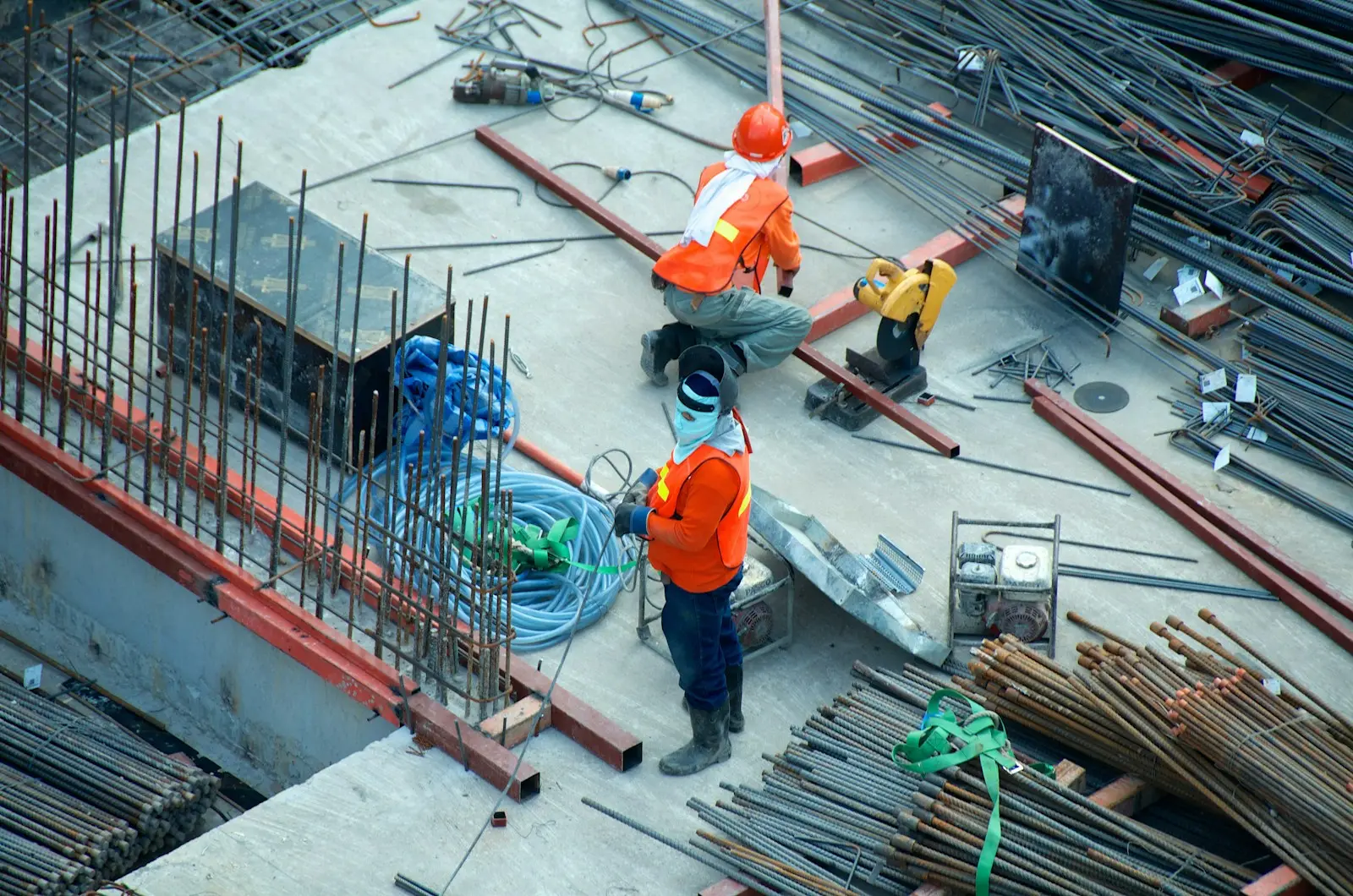
For the reinforced concrete frame of a Delhi house the choice is between ordinary Portland cement of 43 or 53 grade and a blended cement, usually Portland pozzolana cement made with fly ash; for brickwork, plaster, flooring and the other non-structural work a blended cement is the usual and sensible choice. Every bag of either must carry the BIS Standard Mark, because the Cement (Quality Control) Order, 2003 forbids anyone to 'manufacture or store for sale, sell or distribute cement which does not conform to the Specified Standard and which do not bear the Standard Mark'. The standards behind the mark are IS 269:2015 for ordinary Portland cement, which absorbed the separate 43-grade and 53-grade standards; IS 1489 (Part 1):2015 for fly ash based Portland pozzolana cement; IS 455:2015 for Portland slag cement; and IS 16415:2015 for composite cement. This guide sets out what each guarantees, how IS 456:2000 treats them in a concrete mix, where each belongs in a house, how Delhi's summer and winter change the choice, and what to check on the bag and in the store.
What Is the Difference Between 33, 43 and 53 Grade OPC?
The grade is the minimum compressive strength, in megapascals, that standard mortar cubes made with the cement must reach at 28 days when tested to IS 4031 (Part 6). Until 2015 each grade had its own standard, and the editions that BIS withdrew when IS 269:2015 replaced them still state the requirements plainly. Under IS 269:2013, 33 grade must reach 16 MPa at 3 days, 22 MPa at 7 days and 33 MPa at 28 days, with a ceiling of 48 MPa; under IS 8112:2013, 43 grade must reach 23, 33 and 43 MPa, with a ceiling of 58; and under IS 12269:2013, 53 grade must reach 27, 37 and 53 MPa. All three ask for a fineness of at least 225 square metres per kilogram, an initial setting time of at least 30 minutes and a final setting time of at most 600 minutes, and all three allow up to 5 percent of performance improvers such as fly ash, slag or limestone to be ground in. BIS's catalogue shows IS 8112:2013 and IS 12269:2013 as withdrawn and 'superseded by IS 269:2015', and lists IS 269:2015 (sixth revision, reaffirmed 2020, one amendment) as the single active standard for ordinary Portland cement; the 2015 text is available only behind a BIS login, so the figures above are quoted from the 2013 editions it consolidated. The differences that matter on site are early strength and heat. A 53 grade cement must reach 27 MPa in 3 days, more than a 33 grade must reach in 7, which is why formwork comes off sooner with it; the same fast reaction releases its heat faster, which is why it needs curing started early and kept up.
What Is PPC, and Is It Weaker?
Portland pozzolana cement is ordinary Portland cement clinker ground or blended with fly ash. IS 1489 (Part 1):2015 requires the fly ash content to be 'not less than 15 percent and not more than 35 percent by mass' of the cement, a fineness of at least 300 square metres per kilogram, the same setting times as OPC, a drying shrinkage of at most 0.15 percent, and compressive strengths of 16, 22 and 33 MPa at 3, 7 and 28 days: exactly the 33 grade figures. The standard also requires the bag to state the 'percentage of fly ash addition'. So the honest answer to 'is PPC weaker' is that its guarantee is lower and slower. A good PPC usually tests well above 33 MPa at 28 days and keeps gaining strength for months as the fly ash reacts with the lime the clinker releases, but the standard promises only 33, and at 3 and 7 days it promises less than a 43 or 53 grade OPC. What PPC gives in return is a slower, cooler reaction and a denser long-term paste, which is why IS 456's Table 4 admits Portland pozzolana and slag cements for concrete exposed to sulphates and notes that slag cement with more than 50 percent slag resists them better, and why PPC is the natural choice for mass concrete, masonry mortar, plaster and floors. The trade is in the curing: IS 456 clause 13.5.1 requires at least 7 days of moist curing for ordinary Portland cement and 'at least 10 days where mineral admixtures or blended cements are used', and recommends extending that to 14 days. A PPC slab stripped and left dry after four days has been denied the very reaction that makes it durable.
What About Slag Cement and Composite Cement?
Portland slag cement under IS 455:2015 replaces 25 to 70 percent of the cement by mass with granulated blast furnace slag, asks for a fineness of at least 225 square metres per kilogram, and guarantees the same 16, 22 and 33 MPa as PPC. It is common where steel plants are near; in Delhi it is stocked by fewer dealers, so ask before specifying it. Composite cement is the newer option. IS 16415:2015 blends clinker with both fly ash and slag, and its first amendment of February 2023 tightened the recipe to at least 45 percent clinker (or 50 percent ordinary Portland cement), 10 to 25 percent fly ash and 25 to 40 percent slag, and raised the strength requirement to 23, 33 and 43 MPa at 3, 7 and 28 days, the 43 grade figures, with a fineness of at least 300 square metres per kilogram and a drying shrinkage of at most 0.15 percent. In other words a composite cement to the amended standard carries a 43 grade guarantee with a blended cement's chemistry, which is an attractive combination for a frame if a brand carrying the mark is available; the same longer curing applies.
What Does IS 456 Require of the Cement in Concrete?
Three things that owners and many contractors get backwards. First, clause 5.1 lists the cements that may be used, including all three grades of OPC, Portland slag cement to IS 455 and Portland pozzolana cement to IS 1489, and says 'the type selected should be appropriate for the intended use'. Second, Table 5 fixes a minimum cement content and a maximum water-cement ratio for durability, and these do not change with the grade of the cement. For reinforced concrete in 'mild' exposure, which is the protected interior of a building, the minimum is 300 kg of cement per cubic metre, a water-cement ratio of at most 0.55 and a minimum grade of M20; for 'moderate' exposure, which covers surfaces exposed to condensation and rain, concrete buried in non-aggressive soil and surfaces sheltered from severe rain, it is 300 kg, 0.50 and M25. The table's first note says the cement content 'is irrespective of the grades of cement', so a 53 grade bag never licenses fewer bags in the mix; it changes how fast the concrete gains strength, not how much cement durability needs. Third, the grade of the concrete is a separate thing from the grade of the cement. M20 or M25 is a property of the designed mix, its proportions, water and compaction, and IS 13920 requires M25 rather than M20 for buildings more than 15 m high in zones III to V, which in Delhi means every stilt-plus-four house at 17.5 m. Our slab, column and beam size guide covers that rule, and the earthquake-resistant construction guide the rest of zone IV's demands.
Which Cement Goes Where in a Delhi House?
Our recommendation, which the structural engineer's specification overrides where it differs. For the frame, that is footings, columns, beams, slabs and the staircase, ordinary Portland cement of 43 or 53 grade, or a composite cement carrying the 43 grade guarantee, with the mix designed to the IS 456 minimums and cured for the full period. PPC is acceptable in the frame when the engineer specifies it and the site can guarantee the longer curing; it is a poor fit for a site that strips early and cures by habit. For brickwork mortar, plaster, floor screeds, waterproofing screeds and plinth protection, PPC. For foundations where the soil report shows sulphates, the cement that IS 456's Table 4 prescribes for that sulphate class, which for the lower classes includes PPC and slag cement; our soil testing guide explains what the report shows. Two seasonal notes. In a Delhi summer, when the air is over 40°C and the concrete's own heat adds to it, the slower-reacting blended cements are kinder to a slab, and the hot-weather precautions in our summer concreting guide matter more than the grade. In winter the opposite holds: IS 7861 (Part 2) prefers cement that gives early heat and strength, which argues for 43 or 53 grade OPC in a December or January slab, as our winter concreting guide explains. Whatever the choice, use one cement in one pour; mixing bags of different types in a single slab changes the setting and the colour unpredictably.
What Should You Check on the Bag and in the Store?
The mark first. BIS's list of products under compulsory certification, updated 10 July 2026, carries sixteen cement standards under the 2003 order, including IS 269, both parts of IS 1489, IS 455 and IS 16415, and a bag without the Standard Mark and the licence number beneath it is not legal to sell. Then the printing the standards require: the type and grade, the batch number 'in terms of week, month and year of packing', the net mass of 50 kg, and on a PPC bag the percentage of fly ash, a 'best before date (that is, 3 months from date of packing)' and a note on 'the need for testing of cement more than 3 months old to check conformity before its use'. That last line is the rule for old stock of any cement: test it before it goes into a slab rather than argue about it afterwards. Cement that has sat in a damp store sets in the bag, and lumps that do not crumble between the fingers mean the bag should be rejected. In the store, bags belong on a raised platform clear of the floor and walls, under cover, stacked so that the oldest are used first. On site the test that matters is the concrete cube, cast at the pour and crushed at 7 and 28 days, which measures what the cement, the mix, the water and the compaction produced together; our stage-wise quality checklist explains how many cubes and when.
How Does the Choice of Cement Affect the Cost?
Less than curing and workmanship do. Cement prices move with the market and differ by brand and grade, so we do not print them; what we fix is the specification. Our house construction packages, from ₹1,500 per sqft of built-up area, name the cement type for the frame and for the finishing work, and the agreement lists materials by brand and grade so that a change is a written change order. Two false economies to refuse: a 53 grade cement offered as a reason to reduce the bags in a mix, which Table 5 of IS 456 rules out, and a PPC frame offered as a saving without the 10 to 14 days of curing that make it sound. Our materials guide covers the rest of the specification, and our brick, fly ash brick and AAC guide the walls the cement will bind. We are trusted by DAV Pitampura and DPS Dwarka for campus civil repairs and maintenance. To have a specification drawn up for your plot, call +91-7838355055 or book a free site visit.
Ready to Start Your Project?
Get a free site inspection and detailed cost estimate from Nirman Ved.
Get Free Consultation